
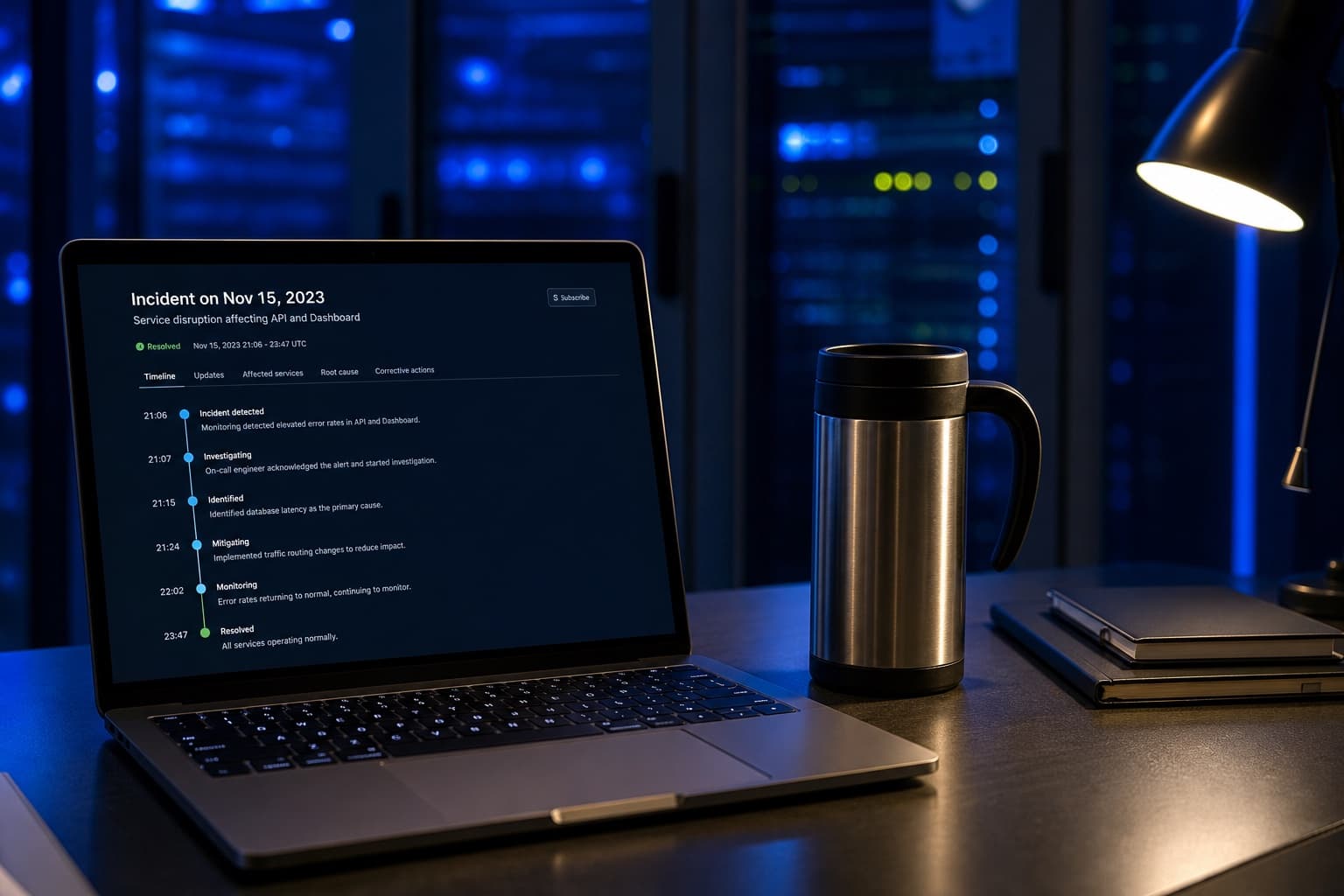
How to Humanize a Status Page Incident Update After ChatGPT
ChatGPT status updates apologize in loops and blur timestamps customers need. Lock UTC timeline, affected components, and customer impact from the incident channel first. Humanize customer-facing prose—not times, component names, or remediation steps.
Status pages are read while customers are losing money or sleep. They refresh every two minutes looking for one thing: What broke, is it still broken, and when did it change?
ChatGPT status updates sound accountable—"we take this seriously," "working around the clock"—and blur the timeline customers use to decide whether to wait or failover.
Human Writes is the voice pass after UTC timestamps and component names are locked—not a substitute for incident command or legal review on customer commitments.
Internal depth: incident postmortem. On-call procedures: runbook. Change comms: change management email. Hub: best practices for humanizing.
What customers and account teams punish
| Element | Weak AI status update | Strong customer timeline |
|---|---|---|
| Time | "Earlier today" | 2026-09-15 14:32 UTC |
| Scope | "Some users" | API exports, US-East |
| State | Vague "issues" | Investigating → Identified → Monitoring |
| Impact | Apology stack | What fails (login, exports, webhooks) |
| ETA | "Soon" | Time window or "no ETA yet" |
Account managers forward status links to angry buyers. Timestamps are the product—warm prose is not.
Customer timeline before any model
From PagerDuty, Slack #incident, or your commander doc:
| Time (UTC) | State | Customer-facing fact |
|---|---|---|
| 14:32 | Investigating | Elevated 5xx on API exports |
| 14:58 | Identified | Bad deploy to export workers |
| 15:20 | Monitoring | Rollback complete; error rate falling |
| 15:45 | Resolved | Exports stable 15 min |
Add impact row: login unaffected, exports failing, webhook delay < 2 min.
Prompt: "Write three status updates from this table. Max two sentences each. No new causes or components."
Status page vs postmortem vs runbook
| Artifact | Audience | Content |
|---|---|---|
| Status page | Customers | Live timeline + impact |
| Postmortem | Engineering | Root cause, action items |
| Runbook | On-call | Commands at 3am |
| Change email | Employees | Internal cutover |
Link postmortem when published; do not dump five-whys into status while the incident is open.
Humanize scope
| Element | Humanize? | Why |
|---|---|---|
| UTC timestamps | No | Customer trust |
| Component names | No | Must match status provider |
| State transitions | No | Automation may sync these |
| Body sentences | After timeline locked | Removes apology loops |
| Legal commitments | No | Counsel review |
Use Article or General Writing purpose—plain language, not marketing.
Before and after
AI status update:
We are currently experiencing technical difficulties that may impact some users. Our team is actively investigating and working to restore service as quickly as possible. We apologize for any inconvenience and appreciate your patience.
After timeline row + one pass:
14:58 UTC — Identified: Export API errors spiked after deploy
v2.14.3. Login and webhooks are unaffected. Rollback in progress; next update by 15:15 UTC or sooner if state changes.
Second version has time, scope, and next update promise.
Workflow
- Incident commander owns customer comms cadence.
- Paste timeline from incident channel—no memory.
- Draft update per state change; keep one fact per sentence.
- Legal review if SLA or contract language applies.
- One Human Writes pass on body; restore every timestamp.
- Post; set reminder for next update window.
- After resolve, link postmortem when ready.
What not to do
- Round UTC times to "about 3 p.m."
- Humanize until component names change spelling.
- Promise root cause before identified.
- Paste internal runbook commands publicly.
- Go silent after "investigating" without a scheduled update.
Bottom line
Status page incidents win on a customer-facing timeline: UTC times, affected components, honest state. Human Writes trims apology loops after facts are locked.
Paste stiff status body copy on Human Writes when every timestamp matches the incident channel.